IBWTIBWT-PUB-0001 REV C
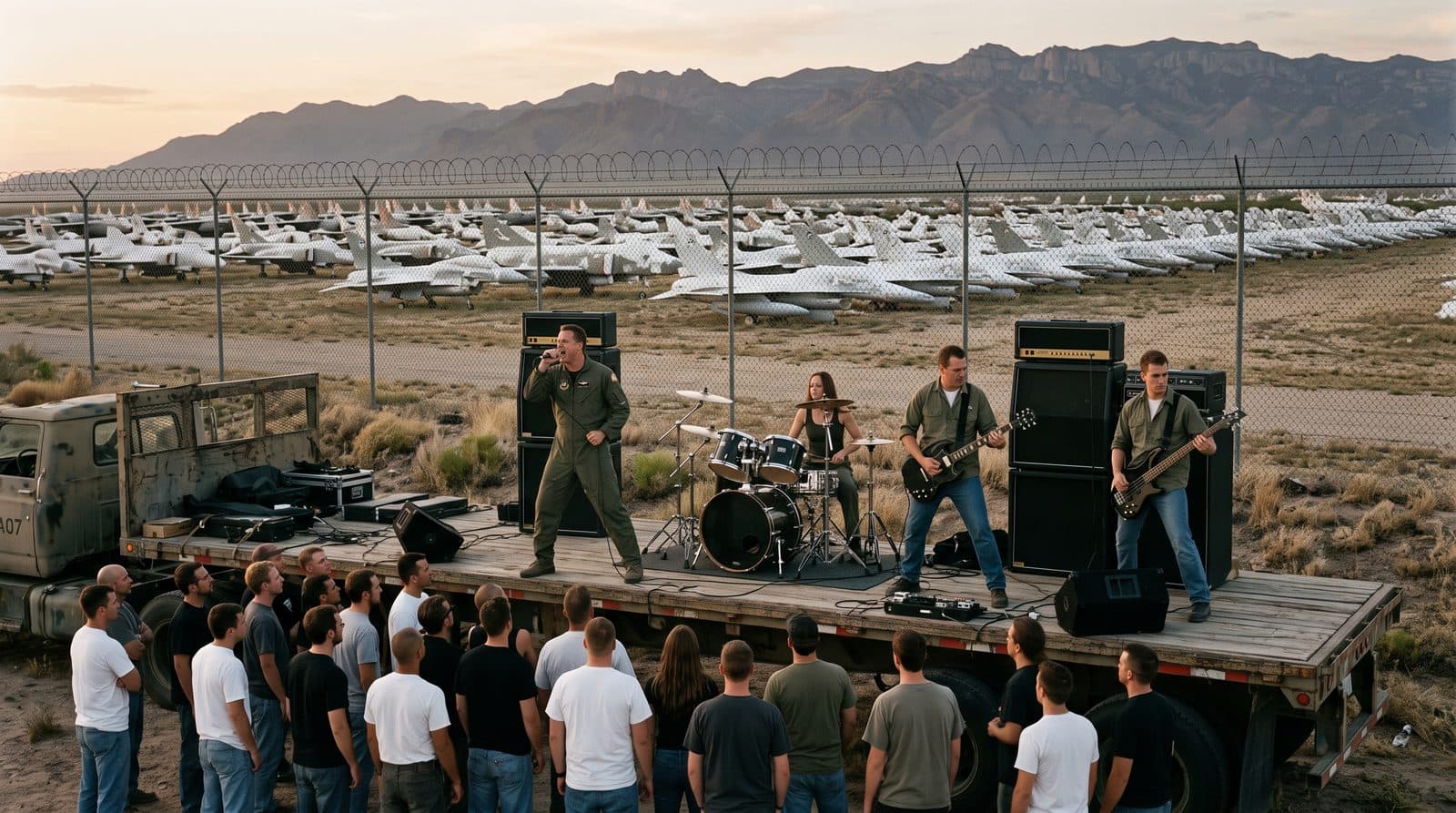
In BRRRRRRT We Trust on stage, Tucson

Tucson, Arizona · 1991–2003

IN BRRRRRRT WE TRUST™

Funded. Fielded. Loud.

The A-10 deserved a band.

PROGRAM
Close Air Support Industrial
CONTRACTOR
Cost-Plus Records
PLACE OF PERFORMANCE
Tucson, Arizona
PERIOD OF PERFORMANCE
1991–2003
STATUS
The A-10 is still flying.

6

R's in the name

You hear six. The seventh is the one that got you.

7

Barrels, GAU-8/A

Rotating. Not negotiable.

3,900

Rounds per minute

The individual rounds cannot be distinguished.

14

Pages in the technical rider

Appendix B covers the beer.

SECTION 1

Mission Brief

“You don't hear the one that got you.”— In BRRRRRRT We Trust, band motto, attribution disputed

1.0 The Mission Brief

The A-10 Thunderbolt II — universally and correctly known as the Warthog — is not a beautiful aircraft. It was designed around a gun. Specifically the GAU-8 Avenger, a 30mm seven-barrel rotary autocannon that fires at up to 3,900 rounds per minute and produces, upon firing, a sound that has become the most beloved noise in close air support history.

BRRRRRRT.

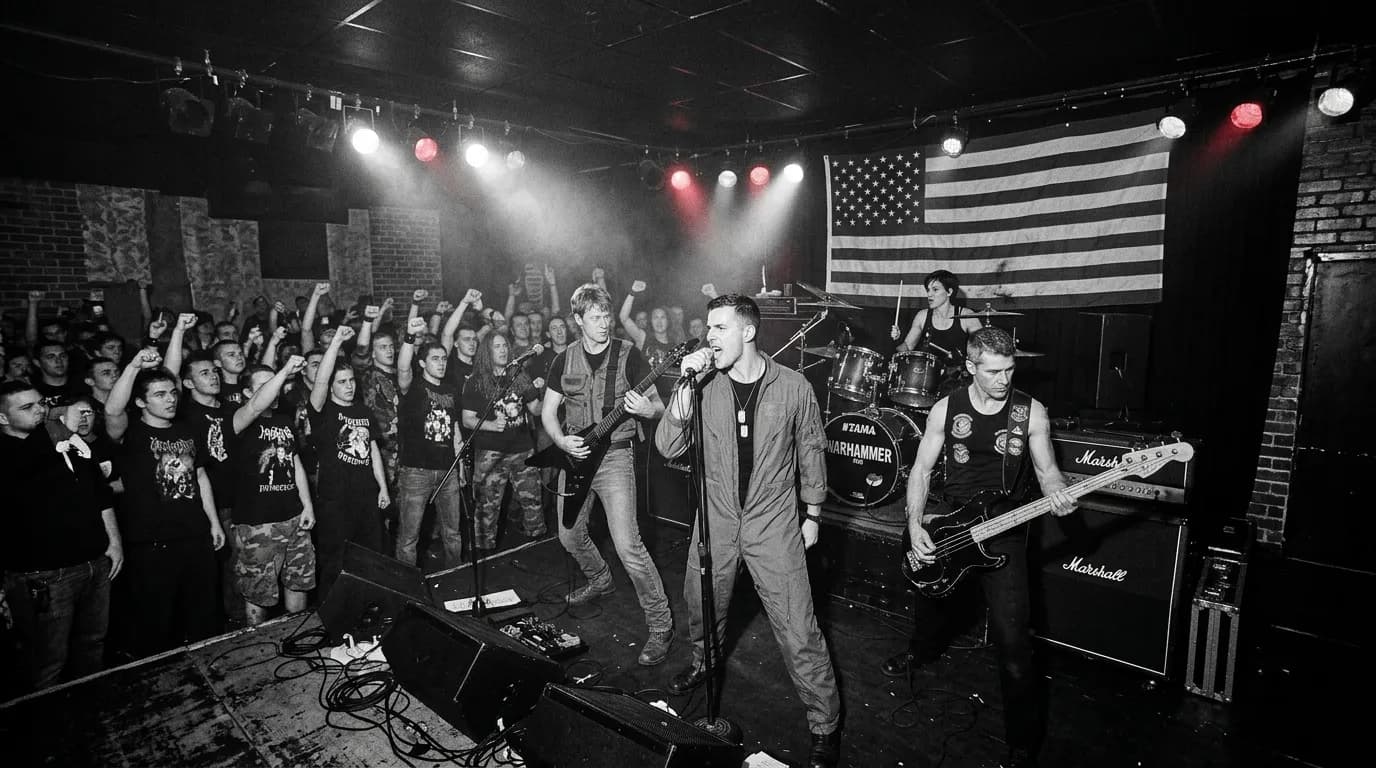
In BRRRRRRT We Trust formed in Tucson in 1991 because four people heard that sound and decided it needed to be enshrined in music. Not celebrated ironically. Enshrined.

"The A-10 is the most honest aircraft ever built," lead vocalist Marcus Webb said in a 2001 interview. "It does one thing. It does that one thing better than anything else that has ever existed. It makes a sound when it does that thing. The sound is the truth. We are the sound."
2.0 The Stand

The Air Force has attempted to retire the A-10 eleven times. The A-10 is still flying. In BRRRRRRT We Trust considers this a shared victory.

They disbanded in 2003 when Webb announced he could not continue playing music while another retirement attempt was underway. "You cannot play thrash metal and testify before Congress simultaneously," he said. "I have tried. Congress does not appreciate the context."

The band has been asked about a reunion. Webb has said he will consider it when the A-10's retirement is formally and permanently cancelled by act of Congress with a ten-year funding guarantee. As of this writing, the A-10 is still flying.

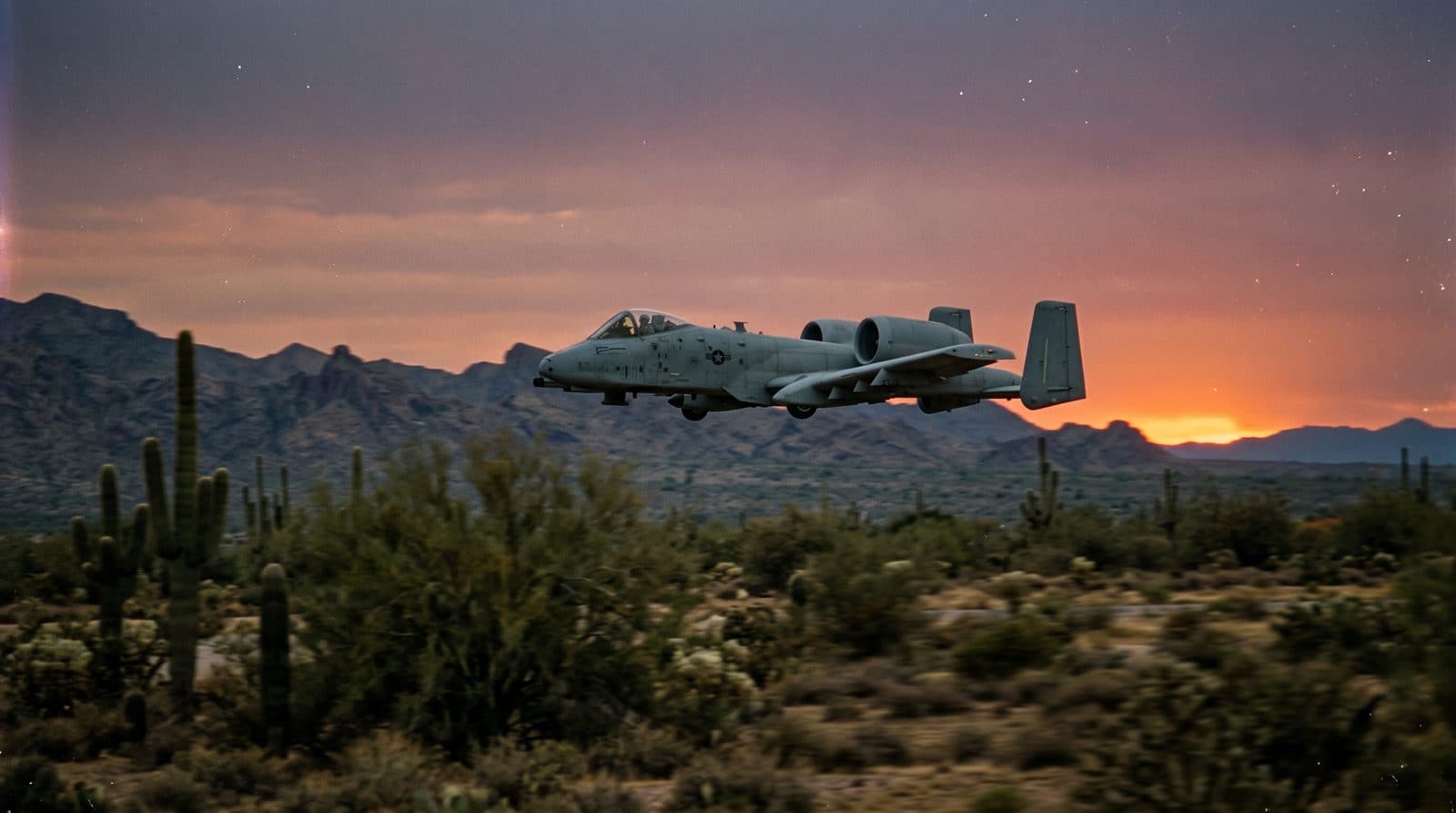
An A-10 low over the Sonoran desert at dusk

SECTION 2

Personnel

Marcus Webb

CALLSIGN “BRRRRRRT”

Marcus Webb

Lead Vocals · 1991–2003

“The A-10 doesn't ask if the target is ready. Neither do we.”

CURRENT DISPOSITIONHas testified before the House Armed Services Committee twice about A-10 retirement proposals. Wore the shirt both times. Nobody mentioned it. He considers this a missed opportunity.

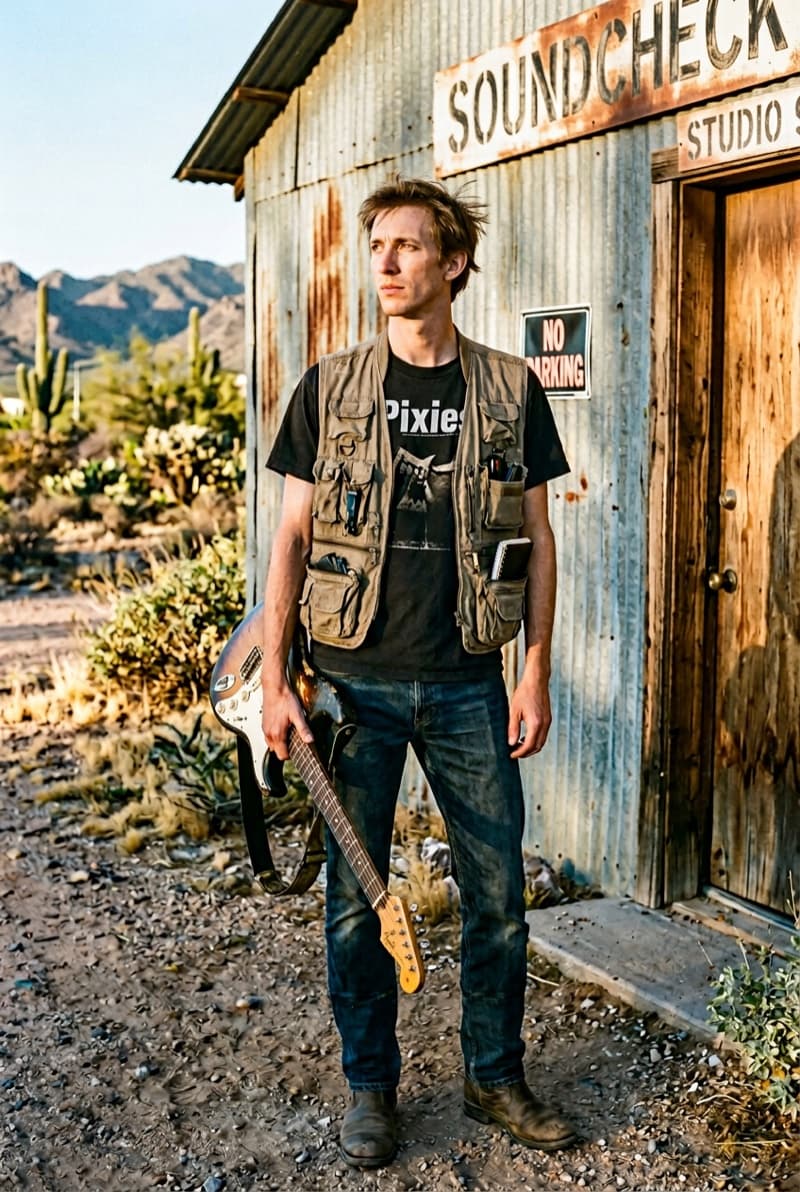
Dennis Kowalski

CALLSIGN “Cost-Plus”

Dennis Kowalski

Lead Guitar · 1991–2003

“The cost is justified. The justification is in the document.”

CURRENT DISPOSITIONStill works in defense contracting in Tucson on projects he will not name. His guitar playing has been described as "what a cost overrun sounds like in E minor."

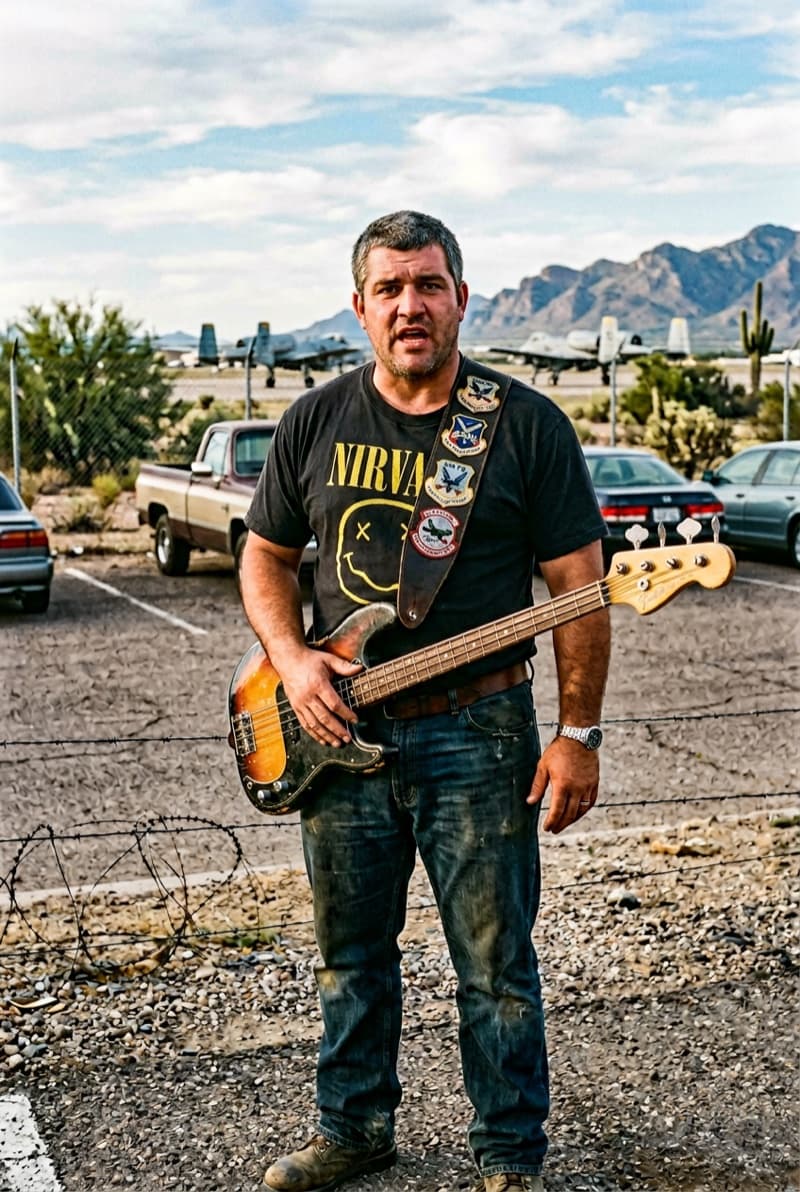
Dave Pruitt

CALLSIGN “Warthog”

Dave Pruitt

Bass · 1991–2003

“The A-10 is not retiring. I will say this until I am wrong, which will be after I am dead.”

CURRENT DISPOSITIONDrove a bus on base for six years. Never served. Has opinions about the A-10 indistinguishable from those of people who have flown it. The band does not see this as a problem.

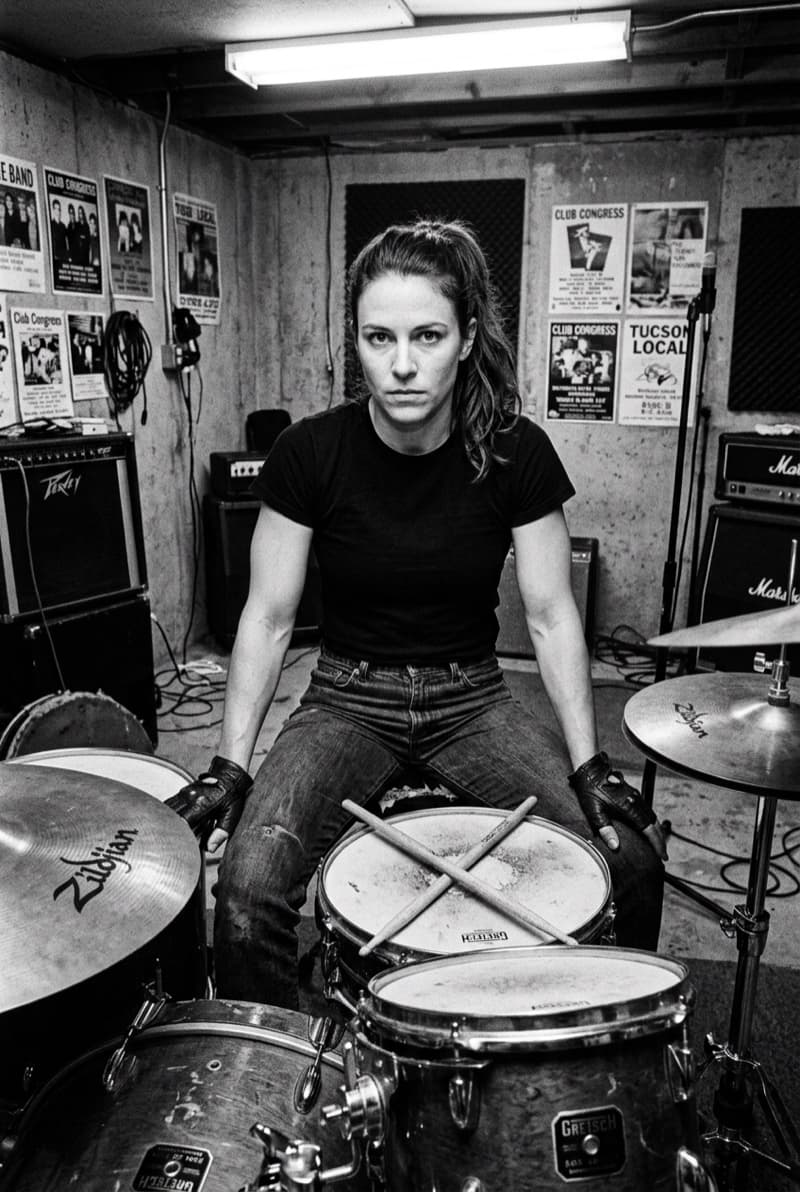
Elaine Kowalczyk

CALLSIGN “Seven Barrels”

Elaine Kowalczyk

Drums · 1991–2003

“I generate the required decibel level. This was the selection criterion. I have met it.”

CURRENT DISPOSITIONSergeant Major, retired. Twenty-two years. Has said: "The GAU-8 fires seven barrels in rotation. I play seven drums. This is not a coincidence." It may be a coincidence.

Support Element

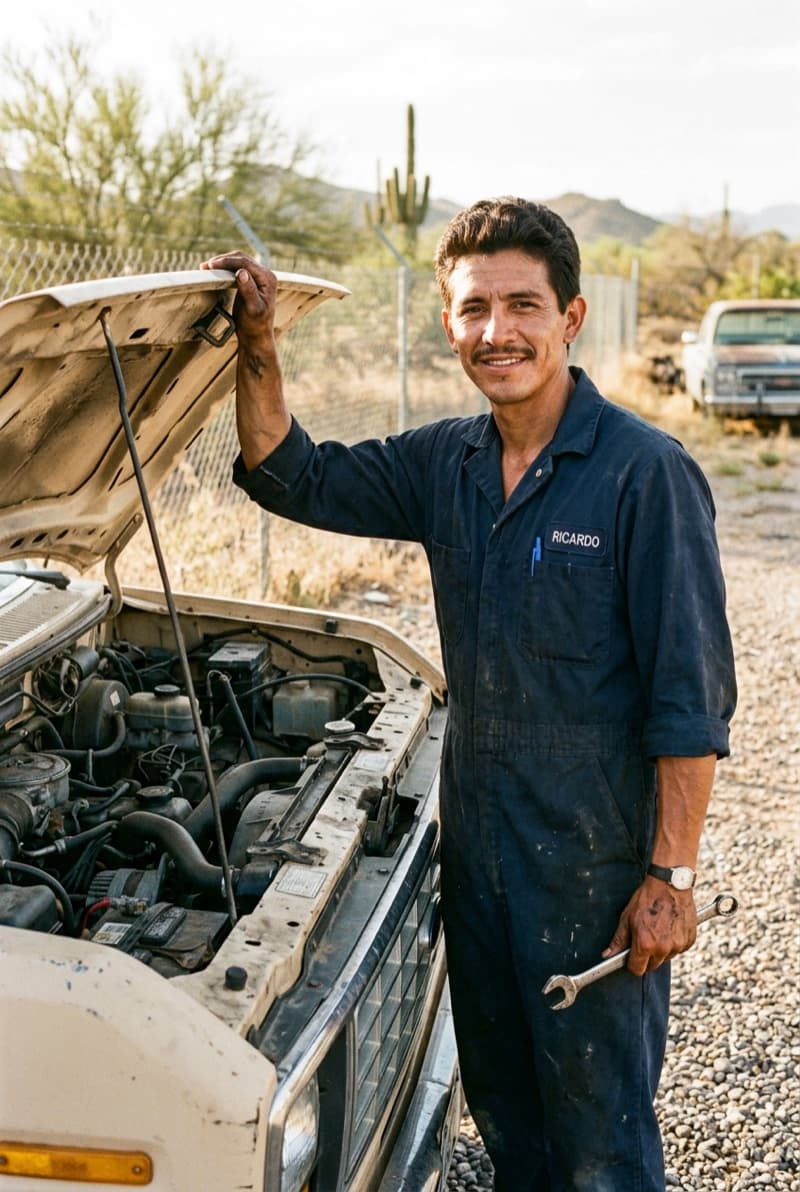
Tony Reyes

Tony Reyes “Wrench”

Vehicle & Equipment Maintenance · 1991–2003

Runs a transmission shop on South 6th Avenue, Tucson. Still wears the jumpsuit.

Linda Vasquez

Linda Vasquez

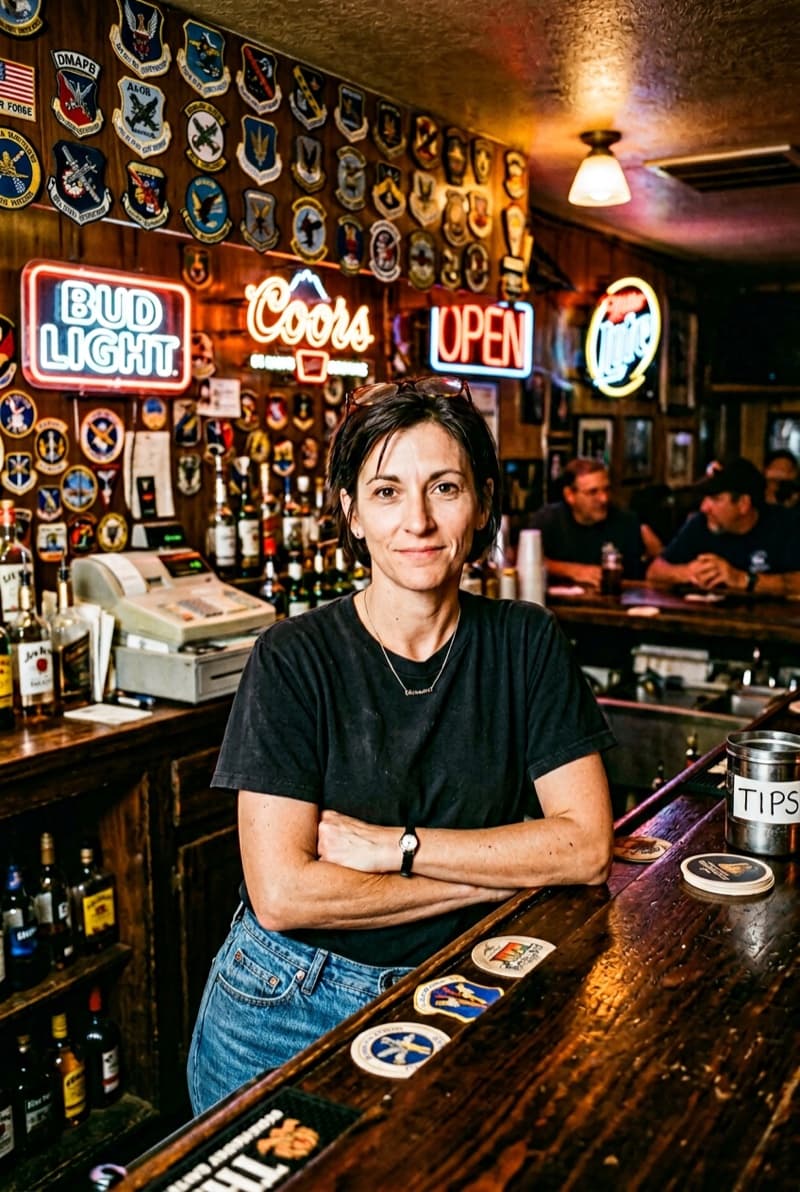
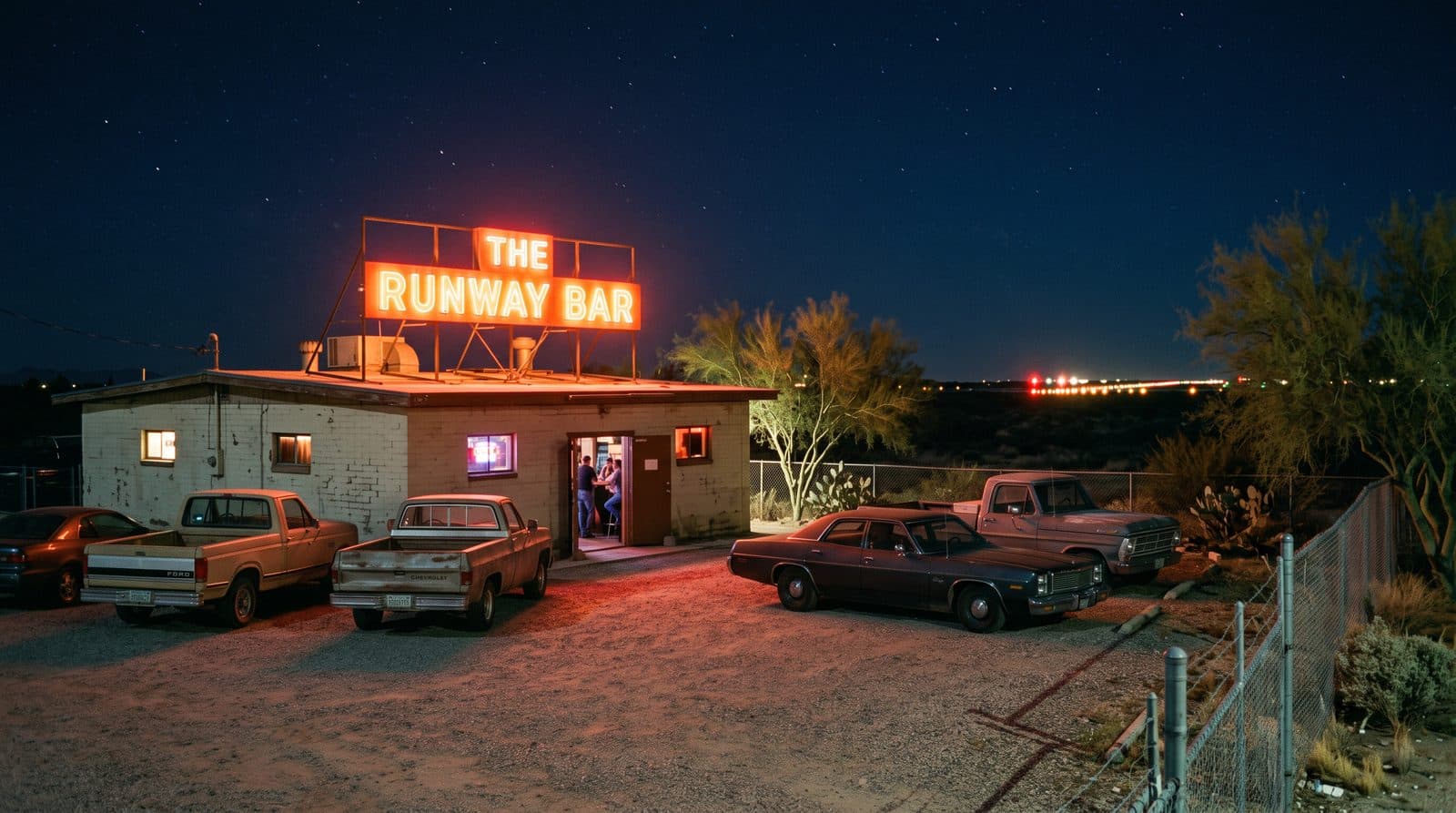
Venue Owner (The Runway Bar, Tucson) · 1991–2003

Sold The Runway Bar in 2004. Manages a hotel near Tucson International Airport. Still efficient.

Brian Holt

Brian Holt “Captain Holt”

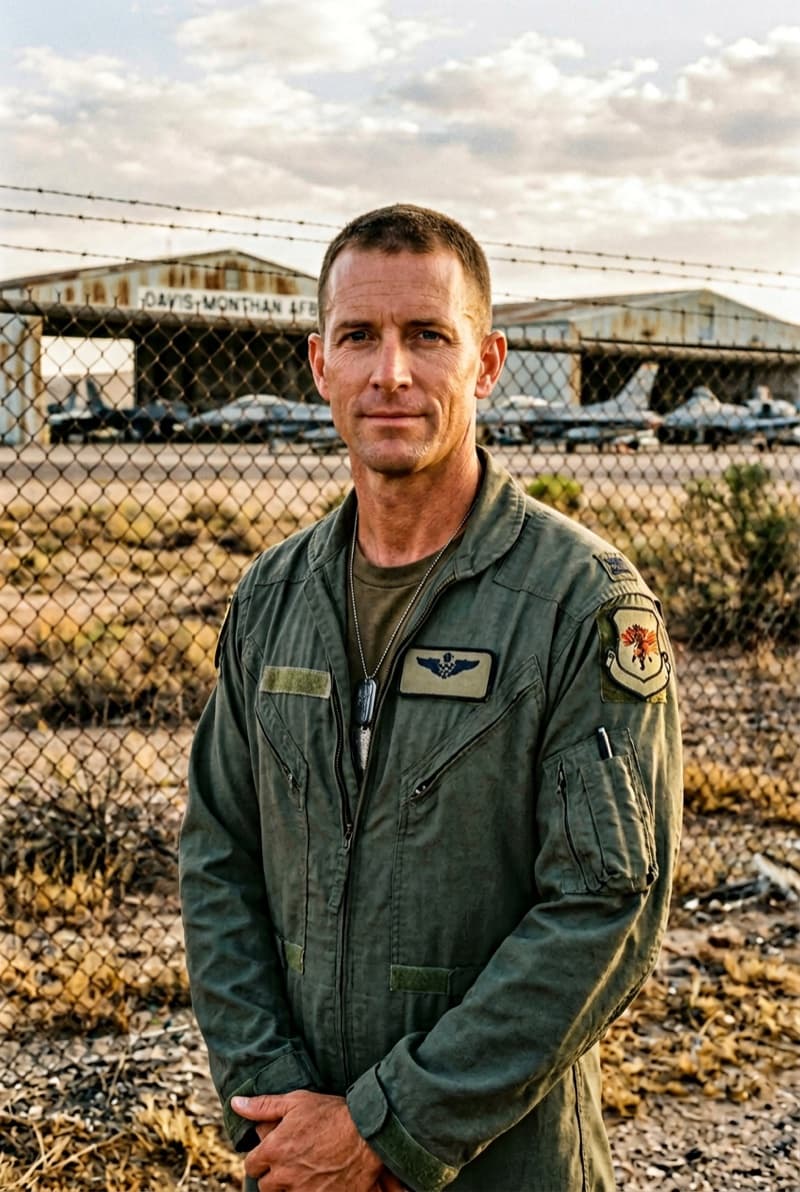
A-10 Pilot / Fan (Davis-Monthan AFB) · 1995–2003

Retired Colonel. Defense consultant. Still has the cassette. The cassette is framed.

SECTION 4

Technical Rider — Excerpts

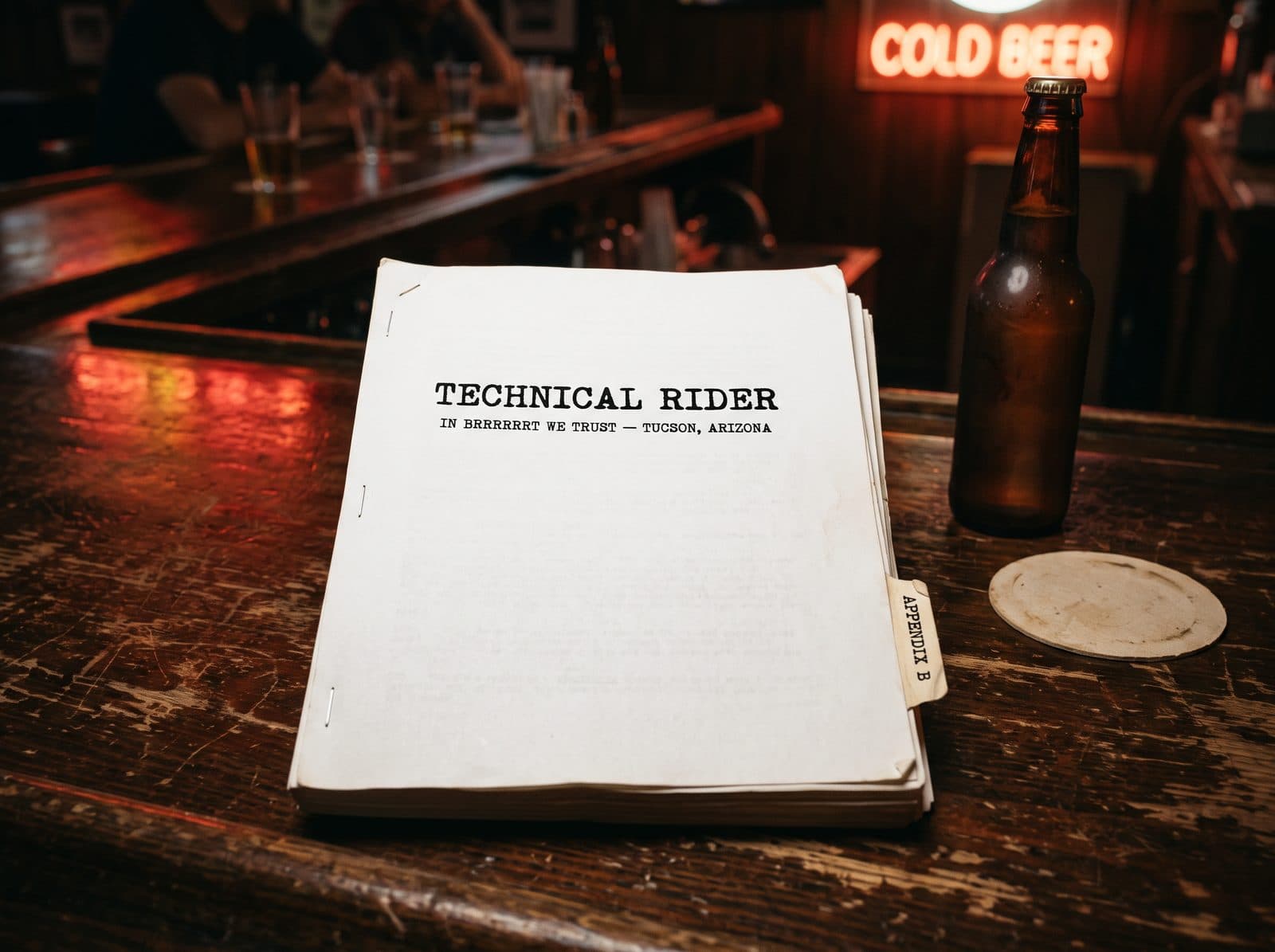
The full rider runs fourteen pages and is issued to every venue at least thirty days before load-in. The venue owner at the band's second show asked if it was a joke. The answer is on file. It was a negative.

The fourteen-page technical rider on a bar table
  1. p. 1

    1.0 Purpose

    This document establishes the minimum conditions under which In BRRRRRRT We Trust will deliver a performance. Deviations will be accepted if documented.

  2. p. 4

    3.2 Stage Loading

    The drum riser must support the distributed load specified in Table 3-1. Seven drums. One drummer. The calculations are attached.

  3. p. 7

    5.1 Egress

    Two routes from stage to load-out, marked and unobstructed. The band will walk both before doors.

  4. p. 11

    8.4 Sound Pressure

    The required level will be achieved. The venue is asked not to question how.

  5. p. 14

    Appendix B

    One (1) case of beer, domestic, cold. Delivered to the green room no later than load-in plus thirty minutes.

SECTION 5

Mission Log

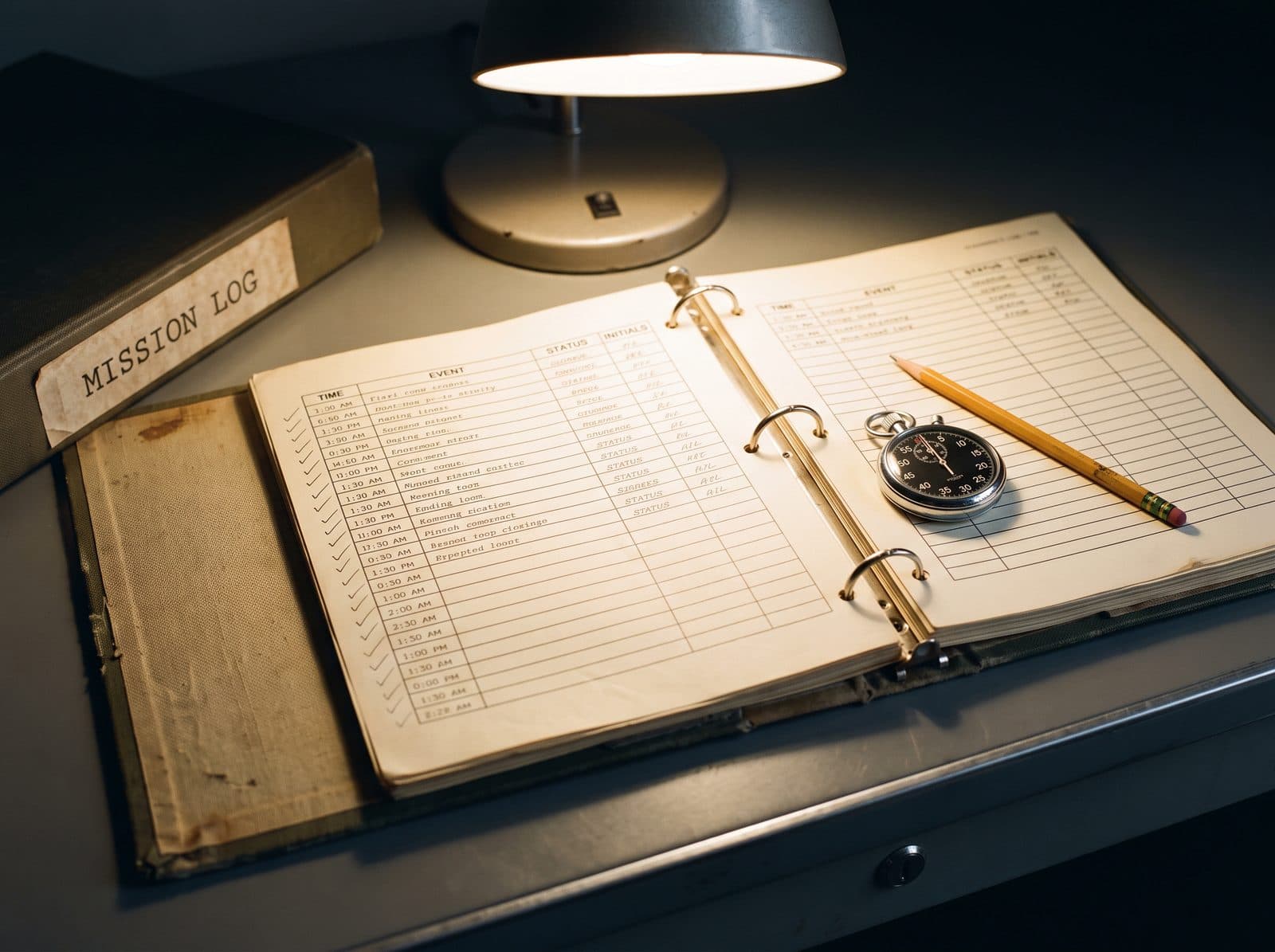
Marcus Webb kept a mission log for every show from 1991 to 2003: date, venue, audience count, start and end times, equipment status, and a post-show debrief. The archive holds the log. The entries below are the ones that required a report.

1991The FormationA bar near Davis-Monthan AFB, Tucson, Arizona

Marcus and Dave said BRRRRRRT simultaneously when an A-10 flew over. They had never met. Marcus said he wanted to start a band about that. Dave said okay.

In the spring of 1991, Marcus Webb and Dave Pruitt were at a bar near Davis-Monthan AFB in Tucson when an A-10 conducted a low approach over the area and both of them said "BRRRRRRT" at the same moment. They had not met before. They looked at each other. Marcus said he wanted to start a band. Dave said what kind of band. Marcus said a band about that. He pointed at the sky where the A-10 had been. Dave said okay. Dennis was at the bar for unrelated reasons and overheard this exchange and said he played guitar and had thoughts about defense acquisition. Marcus said that was relevant. Dennis sat down. Elaine was recruited six months later after being the only drummer who could play "3,900 Rounds Per Minute" at tempo. She played it twice. The band was complete.

1991Elaine's AuditionA rehearsal space in Tucson, Arizona

Marcus auditioned eleven drummers with a scoring rubric. Elaine arrived eleven minutes late due to a flat tire. She was the only one who met all four criteria. Marcus hired her. He told her the eleven-minute notation would say "unforeseeable." She said that was accurate.

Marcus Webb auditioned eleven drummers for In BRRRRRRT We Trust between January and March 1991. He had a scoring rubric. The rubric included: tempo stability under sustained high-BPM conditions, decibel output at peak, recovery time after complex fills, and what Marcus described in the rubric as "operational commitment" — the willingness to play at full capacity for the duration without reduction. Elaine Kowalczyk arrived eleven minutes late for her audition because of a flat tire. Marcus noted this in the audition log. She was the only drummer who met the decibel output specification. She was the only drummer who met all four rubric criteria. Marcus offered her the position at the end of the audition. He told her she had met the specifications and that the eleven-minute deviation would not affect his decision because the data from the audition was sufficient. Elaine said she knew. She asked what the late arrival notation in the log would say. Marcus said it would say eleven minutes, flat tire, unforeseeable. Elaine said that was accurate. She has not been late since.

1992The 14-Page Technical RiderA bar in Tucson, Arizona

Their second venue received a 14-page technical rider with load-bearing calculations and egress routing. The venue owner asked if it was a joke. Marcus said that was a negative.

In BRRRRRRT We Trust submitted a technical rider to their second venue that was fourteen pages long. The rider included: stage dimensions required with load-bearing calculations, minimum sound system specifications with decibel output requirements, monitor placement diagrams, cable routing specifications, power requirements with circuit calculations, lighting specifications including color temperature preferences, audience egress routing recommendations, parking allocation for the band van, dressing room requirements including temperature range, and a single-page appendix covering contingency protocols for equipment failure. The venue owner, a man named Phil who had been booking bands for eleven years, called Marcus after receiving the rider and asked if this was a joke. Marcus said that was a negative. Phil said most bands just ask for a case of beer and a working PA. Marcus said In BRRRRRRT We Trust would also accept the case of beer. Phil accepted these terms. The show went on. Phil has since described the rider as the most thorough document he has received from a band and also the most useful.

1995The Davis-Monthan ShowA bar near Davis-Monthan Air Force Base, Tucson

Three A-10 pilots were in the audience. Dave identified them by how they stand at a bar. The band played the rest of the set with additional weight. One pilot said the band name was correct.

In 1995, In BRRRRRRT We Trust played a show at a bar approximately two miles from the flight line at Davis-Monthan Air Force Base. Three active-duty A-10 pilots were in the audience. Dave Pruitt identified them approximately six minutes into the set by their specific way of standing at a bar and immediately informed Marcus between songs by pointing with his chin, which is the band's established non-verbal communication protocol for audience intelligence. Marcus acknowledged with a single nod. The band played the remainder of the set with what Elaine has described as additional weight. After the show one of the pilots approached Marcus and said the name of the band was correct. Marcus said he knew. The pilot bought a cassette. Marcus has the cassette receipt in the mission log for that show.

1996The Albuquerque ContingencyInterstate 10, New Mexico

The van died on I-10, ninety miles from Tucson. Marcus had a contingency plan. The contingency took four hours instead of the projected two. They made the show with eleven minutes. Marcus wrote a post-incident report identifying three process failures.

On the way to a show in Albuquerque in 1996, the van's alternator failed on Interstate 10, approximately ninety miles east of Tucson. Marcus had a contingency plan for vehicle failure. The contingency plan called for a rental vehicle, which was arranged. The equipment was transferred to a rental trailer. The contingency execution took four hours. The projected contingency execution time was two hours. The deviation was two hours. They arrived at the venue with eleven minutes before scheduled start. Marcus conducted the mission briefing in four minutes. They played the show. Marcus wrote a post-incident report that identified three process failures contributing to the two-hour deviation. Dennis had missed the scheduled quarterly maintenance inspection. Dave had taken the van to the shop two weeks prior and the shop had missed the failing component. Marcus had not built adequate margin into the contingency timeline. The report was distributed to all members. Elaine filed hers. Dave changed shops. Dennis has not missed an inspection since.

2003Mission CompleteTucson, Arizona

Marcus sent a mission completion report email when the band ended. It had metrics, lessons learned, and a final disposition of assets section. Elaine printed hers. It is on the wall of her teaching studio.

In BRRRRRRT We Trust concluded operations in 2003. Marcus did not say they were breaking up. He said the mission was complete. He sent an email to Dennis, Dave, and Elaine on a Tuesday in October 2003 that was formatted as a mission completion report. It contained: a summary of operations (1991–2003), key metrics (312 shows, 6 albums, 1 van, 37 equipment cost justifications approved, 1,247 mission briefings conducted), a lessons learned section, and a section labeled "final disposition of assets" that covered what would happen to the band equipment. Marcus kept the van. Dennis kept the guitar rigs. Dave kept his bass. Elaine kept her drum kit. The email concluded: "Mission complete. Assets dispersed. Personnel released to independent operations. It has been an honor." Elaine printed her copy. It is on the wall of her teaching studio.

2003The DisbandingA bar near Davis-Monthan AFB, Tucson, Arizona — the same bar

Marcus said the mission had reached an operational pause. An A-10 flew over. Neither of them said BRRRRRRT. In 2014 he called and they all came.

In BRRRRRRT We Trust played their last show in 2003 and disbanded shortly after. The reason was not internal conflict. The reason was that Marcus felt the mission had reached a natural operational pause. He said this in the same bar near Davis-Monthan where he and Dave had met in 1991. An A-10 flew over during the conversation. Both of them looked at the sky. Neither of them said BRRRRRRT. Marcus said the band had done what it needed to do. Dave said okay. The A-10 was still flying. In 2014, when it was threatened again, Marcus called everyone. They came.

2014The DC Parking Lot ShowWashington D.C., near relevant Congressional offices

The Air Force tried to retire the A-10. The band played a parking lot in DC for six people including two Congressional staffers. The A-10 was not retired. The band considers these facts related.

When the Air Force announced the most serious attempt yet to retire the A-10 in 2014, Marcus called the band. Dennis drove from Tucson with the gear in seventeen hours. Dave flew commercial because his truck was in for maintenance. Elaine flew from Colorado Springs. They assembled outside a Congressional office building in Washington, D.C., set up their gear on the sidewalk with a generator that Dennis had rented, and played a set of six songs to an audience of six people, two of whom were congressional staffers who came outside to see what was happening and stayed for "Congressional Testimony (Metal Version)." Marcus gave both staffers a copy of the band's position paper on A-10 retention. One of them said they would pass it along. Marcus said thank you. The A-10 was not retired that year. The band considers these facts connected.

Southwest Circuit, 1995

Ten stops. Two parking lots. One boneyard, observed from outside the fence.

  1. SORTIE 01Tucson, AZ
  2. SORTIE 02The Boneyard (Outside the Fence)
  3. SORTIE 03Davis-Monthan AFB (Parking Lot, Off-Base)
  4. SORTIE 04Phoenix, AZ
  5. SORTIE 05Albuquerque, NM
  6. SORTIE 06Fort Bliss, TX (Adjacent)
  7. SORTIE 07San Antonio, TX
  8. SORTIE 08Nellis AFB, NV (Parking Lot)
  9. SORTIE 09Yuma, AZ
  10. SORTIE 10Tucson, AZ (Return)

SECTION 6

Clippings

Arizona Metal Zine · Winter 1994

In BRRRRRRT We Trust: "The A-10 Is The Point"

Desert Metal Monthly · Fall 1994

In BRRRRRRT We Trust: "Funded. Fielded. Loud."

“We ask for a case of beer too. It's on page fourteen. Appendix B.”

Tucson Weekly · March 1996

In BRRRRRRT We Trust: Loud, Technical, Completely Sincere

“More accurate information about the A-10 than most news coverage of the aircraft.”

Tucson Weekly · March 1998

In BRRRRRRT We Trust at the downtown venue: the most organized band in Tucson

“The drummer generates a volume this reviewer has not encountered from a single person.”

Field Reports

I flew the A-10 for eleven years. I found this shirt in 2019. I have not taken it off for more than six hours at a time since. My wife understands.

— Lt. Col. (Ret.) R. Harmon, Tucson, AZ

I received their technical rider. It was fourteen pages. The show was the most prepared show I have ever hosted. I have kept the rider.

— Phil (venue owner), Tucson, AZ

I heard BRRRRRRT from the ground once. Then I heard this band play it on a drum kit. They are not wrong about the sound.

— A Person Who Has Heard Both, Tucson, AZ

"Congressional Testimony (Metal Version)" is the most accurate recreation of the experience of testifying before the Armed Services Committee I have ever heard. The distortion is correct.

— Defense Policy Analyst, Washington, DC

The drummer played the whole song at that tempo. Then Marcus said again. She played it again. I was at the audition. This is how it happened.

— Dennis Kowalski, Tucson, AZ

The band name is correct. I told the vocalist this. He said he knew.

— An A-10 Pilot, Davis-Monthan AFB

The liner notes for GAU-8 include complete technical specifications of the rotary cannon. I cross-referenced them. They are accurate. Five stars.

— Aircraft Systems Engineer, Tucson, AZ

I was one of the two Congressional staffers at the DC parking lot show. I passed the position paper along. I am not saying the A-10 is still flying because of the band. I am not NOT saying it either.

— A Congressional Staffer, Washington, D.C.

What the Sound Means

The BRRRRRRT sound — the distinctive low-frequency report of the GAU-8/A Avenger firing — is one of the most recognizable sounds in military aviation. It is distinctive because the rate of fire is so high that the individual rounds cannot be distinguished. You hear the sound after you see the effects, because sound travels slower than the projectile. For ground troops who have heard it in close air support context, it is among the most reassuring sounds available.

Marcus Webb understood this when he was twenty-two years old and heard it for the first time from a distance. He understood that a sound that reassuring required music. He spent twelve years providing that music to audiences of between twelve and sixty people in venues across Arizona and one parking lot in Washington, D.C.

The archive asked Marcus if he thought the music made a difference.

The Mission Log

Marcus Webb kept a mission log for every In BRRRRRRT We Trust show from 1991 to 2003. The log contains: date, venue, location, audience count, set list, start time, end time, load-in time, load-out time, equipment status notes, post-show debrief summary, and any significant incidents. There are 312 entries. The Albuquerque entry is the longest. The Davis-Monthan bar entry has the notation "three A-10 pilots, front section, cassette sold, receipt attached." The last entry is dated October 18, 2003, and reads: "Final operational show. All systems nominal. Mission complete. 12 years, 312 shows, 1 case of beer per show as negotiated with Phil in 1992."

The mission log exists. Marcus has it. It is in a binder in his apartment in Tucson, next to the concept paper from 1991. He has shown it to two people: Dave, in 2005, and a defense contractor colleague who was asking about project documentation best practices. He showed it to the colleague as an example of consistent documentation over a twelve-year project. The colleague said it was impressive. Marcus said it was standard.

SECTION 7

Quartermaster

Approved items are issued through the Sideband Label archive store. Requisitions are processed in the order received.

Open the Quartermaster
  • FRONTThe A-10 doesn't ask if the target is ready.
  • BACKTucson, Arizona. 1991–2003. The A-10 Is Still Flying.
  • BACKTucson, Arizona. 1991–2003. Mission Complete.
  • FRONTBRRRRRRT.
  • BACKStill flying.